How to Monitor Elderly Parents Living Alone (Without Cameras)

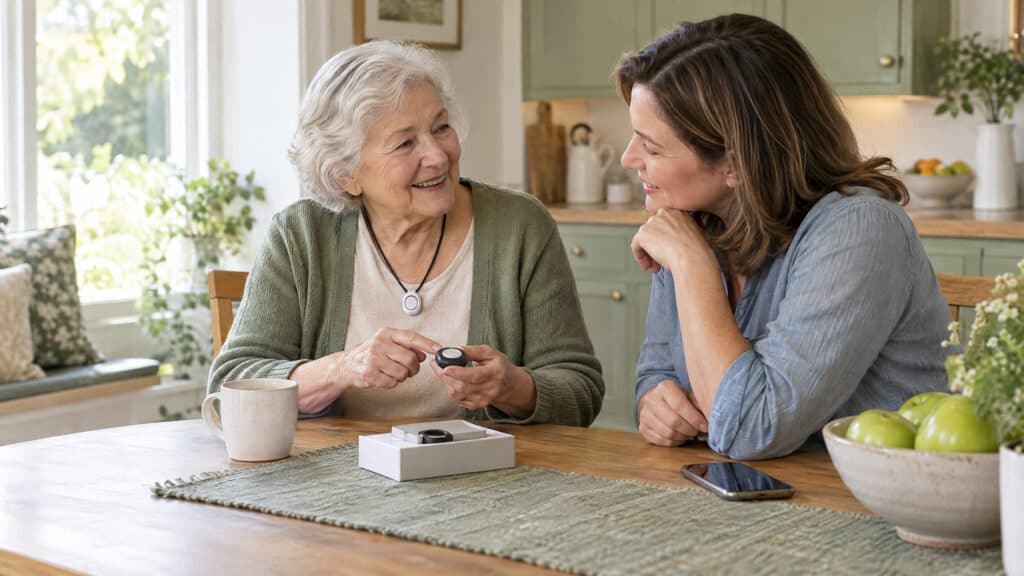
An older woman and her adult child discuss a wearable safety button at home.

Worrying about a parent who lives alone often starts with one missed phone call. Here is how to monitor elderly parents living alone without cameras: pair a daily check-in from a real person with a safety tool that fits how your parent lives. That tool might be a medical alert button or sensors that notice sounds and movement. Let your parent help choose.

This guide compares the most popular options and the practical ways families combine them. We offer some of these care services ourselves, so we also tell you where they are not the right fit. Honest trade-offs matter here.

Many adult children want two things at once: to know their parent is safe, and to respect their parent’s independent living. The good news is that remote monitoring no longer means a camera in every room. Modern technology gives families peace of mind with far less intrusion.

How to monitor elderly parents living alone: start with a conversation

The first step is an open conversation with your parent about what worries you and what they are willing to accept. The National Institute on Aging says the best way to learn what an older adult needs is to ask them directly. A short visit often tells you more than a phone call.

Pick the right time for an honest talk, such as a calm weekend visit rather than the day after a scare. Make your parent part of the decision, so they can live on their own terms and keep their personal space. The most respectful monitoring tools are the ones your parent chose.

Agree on what “checking in” means before you buy anything. Some parents are happy with a call during their morning routine, while others feel watched by anything more. Start small and build a shared plan with other family members, so everyone knows who calls and when.

How to monitor elderly parents living alone: your options at a glance

Most families use two or more of these options together. Each one covers a different gap, and none of them catches everything on its own.

OptionWhat it catchesWhat it missesPrivacy
Family calls and visitsMood, memory and home changes you can seeAnything between callsHigh
Daily check-in serviceA missed routine, low mood, skipped water or medicineFalls between callsHigh
Medical alert deviceEmergencies your parent can reportFalls when the button is not worn or pressedHigh
Sound and motion sensorsSudden impacts and unusual sounds or movementProblems the sensors cannot pick up, such as poor eatingMedium to high
Smart home devices you set upDoors opening and changes in daily activityHow your parent is feeling, unless you callMedium to high
Indoor camerasWhat happens in the rooms they coverRooms without cameras, and your parent’s trustLow
In-home caregiverDaily care needs, and changes a trained person noticesHours when no one is thereHigh

How to monitor elderly parents living alone with daily check-in calls

A daily check-in is a scheduled phone or video call from a real person at the same time each day. The call gives your parent structure and a friendly voice. It also flags early signs that something is off, such as a loss of appetite or a change in mood.

Our daily check-in service for seniors living alone can include medication reminders, hydration prompts and conversation. It is available nationwide, once or twice a day. A check-in call cannot see a fall that happens an hour later, so families who worry about the risk of falls usually add a second layer.

Family calls work best when they fit the most natural parts of the day. A chat over morning coffee or a shared crossword on the phone feels like company to most parents, and it still tells you how they are doing. Your parent keeps a normal routine.

How to monitor elderly parents living alone with a medical alert button

A medical alert button is a pendant or wristband your parent presses to call for help. Many medical alert systems connect to a call center with professional monitoring, where trained staff can talk to your parent and send emergency services if needed. Some models add optional fall detection for times your parent cannot press the button. A mobile system with GPS also works outside the home.

A medical alert device only helps when your parent wears it, including in the shower and at night. Without it, a fall can leave someone on the floor for an extended period. If your parent often takes it off, a tool that needs nothing from them may suit them better.

How to monitor elderly parents living alone with sensors, not cameras

Sound and motion sensors watch for unusual activity in the home, such as a sudden impact, a sound that suggests distress, or a change in movement. They need no button and nothing to wear, and good systems do not record video or conversations. This passive approach suits a parent who forgets or refuses a pendant.

Our senior monitoring system does not use cameras or wearable devices, and it does not record conversations or store audio. Alerts go to our Care Managers and operations team 24/7, who follow up after each alert. Virtual Care Plus adds one sensor to a daily virtual wellness visit, and Virtual Care Pro includes both sensors.

Some families build their own setup from smart home devices instead. Activity sensors in key areas, such as the front door or the medicine cabinet, can learn your parent’s activity patterns over a few weeks. Most smart devices then send a push notification to a mobile app when something looks unusual.

Sensors can help monitor activity and safety, but they only tell part of the story. They cannot tell you whether your parent is eating well or taking medicine correctly, so pair them with a person who checks in regularly.

Indoor cameras

Indoor cameras show you exactly what is happening in a room, live or recorded, and many have night vision. They can bring real peace of mind, especially for a parent with memory challenges who forgets to call back.

The cost is privacy. Many older adults feel watched in their own home, and a camera in a bedroom or bathroom is rarely acceptable. If you use one, place it in a shared space such as the living room, tell your parent where it is, and agree on when you will check-in.

When a check-in is not enough

Technology can tell you that something has changed. It cannot help your parent shower or get to the doctor. Signs that your parent needs hands-on help include missed meals, falls or near falls, unpaid bills and a home that is less tidy than usual. Our list of signs an aging parent needs help at home covers the full picture.

To bridge this gap, a caregiver can provide the consistent, hands-on support that technology alone cannot. A caregiver can start with a few hours a week and grow from there as your parent’s needs change. Many families combine those visits with check-in calls on the other days, which means someone hears from their parent every single day. This mix of home care and calls lets your parent stay at home with less risk.

Frequently asked questions

How can I monitor my elderly parents remotely?

You can monitor elderly parents remotely with a daily check-in call, a medical alert button, or sound and motion sensors that send alerts to a care team. Most families combine a person who calls with a device that works between calls. Talk with your parent first, and choose together.

How can I monitor my elderly parents at home without a camera?

The easiest way to monitor elderly parents living alone without a camera is to use sensors that detect sudden impacts and unusual sounds or movement. Add a daily check-in call or visit, and a medical alert button if your parent will wear one. This covers emergencies and daily routine while keeping their privacy.

What is the best camera to monitor an elderly parent?

The best camera is the one your parent has agreed to, placed in a shared room. We do not sell cameras, so we cannot recommend a model. If privacy is a concern, sensors that do not record video are a gentler choice.

Find the right mix for your parent

Knowing how to monitor elderly parents living alone comes down to a mix: a person who checks in, plus a tool that works between calls. Every family’s mix looks a little different, and the right approach to elderly care changes as your parent ages. Call (844) 785-2273 to talk through your parent’s routine, and we will help you choose what fits.


,

Questions to Ask a Home Care Agency: A Comprehensive Guide

Understanding Sundowning Dementia: Evening Challenges

How Many Hours of Home Care Do I Need for My Parent?

24-Hour Care vs Live-In-Care: How They Differ | Private Home Care

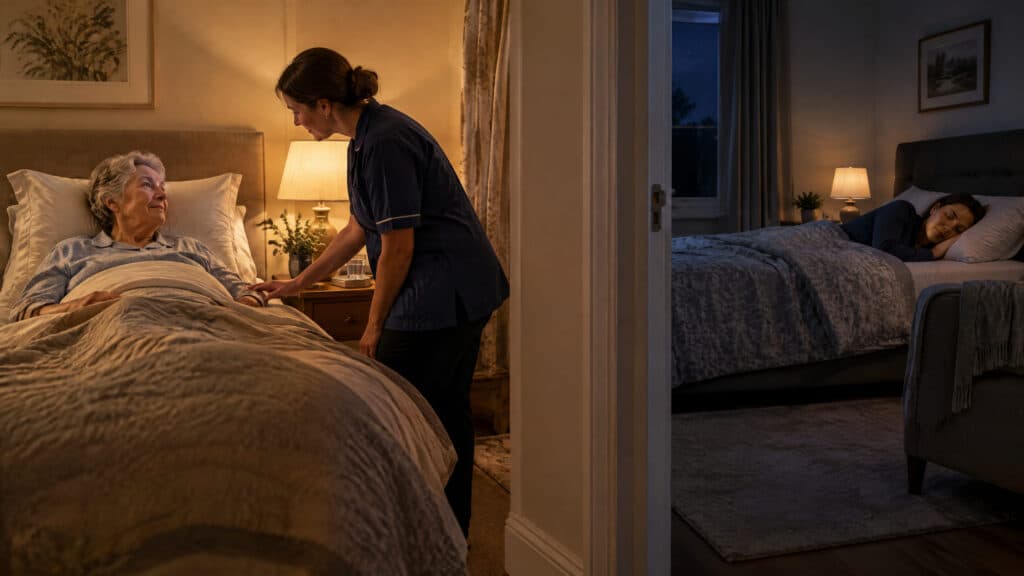
Awake caregiver helps an older adult at night while another caregiver sleeps in a nearby bedroom, illustrating the difference between 24-hour and live-in care.

When one daytime Care Specialist is no longer enough, families start hearing two options that sound the same but work very differently: 24-hour care and live-in care. Both keep someone in the home overnight, and both are non-medical. The real question is whether that person is awake at 3 a.m., and the answer changes the staffing, the cost, and who each setup is right for.

Here is how 24-hour care vs live-in care actually breaks down, so you can match the right arrangement to what your parent needs after dark.


What Is Live-In Care?

Live-in care means one or two Care Specialists stay in the home for a stretch of days at a time, share the daily routine, and sleep there overnight. The Care Specialist gets a private bedroom, meals, and a set sleep period of around eight hours, plus a break during the day. Because someone is present rather than working every single hour, this option is billed at a flat daily rate.

It fits medically stable seniors who sleep through most nights but should not be alone during the day. Daytime support covers meals, light housekeeping, medication reminders, and help with activities of daily living, along with steady company. You also get consistency, since one or two familiar faces build a real relationship with your parent rather than a rotating cast of different people, which matters greatly for comfort and quality of life.

The trade-off is honest: for the hours the Care Specialist is asleep, your parent is largely on their own, so this only works when the nights are calm.


What Is 24-Hour Care?

24-hour care means two or three Care Specialists work rotating shifts, usually eight or twelve hours each, and every one of them stays fully awake and on duty. Nobody sleeps on the clock, so you get continuous supervision at every hour, including the middle of the night. Because you are paying for active, awake coverage the whole time, it is billed hourly and costs more.

This is the right call when the nights are the problem. Awake supervision around the clock is what your parent needs if they wander, need frequent repositioning through the night, are recovering from surgery or a hospital stay, or have advanced dementia and medical needs that do not pause at bedtime.


The One Difference That Matters

Strip away everything else and one thing separates them: at 3 a.m., is the Care Specialist awake or asleep? With 24-hour home care, someone is awake all night. With a live-in arrangement, the Care Specialist is asleep for roughly eight hours and wakes only if needed. Both are forms of in-home care, but cost, staffing, and home requirements all flow from that single fact about nighttime safety.


Live-In Care

  • Care Specialists: 1 to 2, several days at a time
  • Overnight: Care Specialist sleeps, wakes if needed
  • Billing: flat daily rate
  • Home needs: private bedroom and meals required
  • Best for: stable nights, daytime help and companionship

24-Hour Care

  • Care Specialists: 2 to 3 rotating in shifts
  • Overnight: Care Specialist stays fully awake
  • Billing: hourly, higher total cost
  • Home needs: no special requirements
  • Best for: night risk, wandering, complex or changing needs

Which One Does My Parent Need?

Answer one question first: what happens overnight? If your parent sleeps through the night and mainly needs daytime support, company, and a presence in case something comes up, a live-in arrangement usually fits and costs far less. If they are up at night, unsteady, dealing with mobility issues, wandering, or needing regular attention after dark, awake shift coverage is the safest option.

A parent who nods off by eight and sleeps until morning is a very different situation from one who is up and calling out three times a night. Be honest about the nights, because this is where families most often guess wrong. Picking the cheaper option for a parent who truly needs overnight supervision puts them at real risk in practice. A good Care Coordinator reassesses regularly rather than locking you into one arrangement.


What Does Each Option Cost?

When you compare 24-hour care vs live-in care on price, the gap is large and predictable. A live-in arrangement runs at a flat daily rate and is the more budget-friendly of the two, because the Care Specialist is present rather than clocking active hours all night. Awake coverage is billed hourly across every shift and commonly costs close to double. The real figure depends on the hours, the level of support, and your area.


Frequently Asked Questions


Does the live-in Care Specialist really sleep at night?

Yes. In this setup the Care Specialist gets a set sleep period, usually around eight hours, in a private bedroom. They wake to help if your parent needs them, but they are not on active duty all night. If your parent is up and needs help most nights, that broken sleep is a sign you may have moved past what a live-in setup can safely handle.


How do I choose between 24-hour care and live-in care?

Track a week of nights. Count how often your parent is actually up and needs hands-on help after bedtime. Steady, quiet nights favor a live-in arrangement. Frequent night needs, wandering, or medical tasks point to awake shifts.


Can we switch between them?

Yes. Many families start with one arrangement and change as their parent’s needs change. Someone may need awake overnight coverage right after surgery, then step down to live-in care as they get stronger.


Getting It Right

Getting 24-hour care vs live-in care right comes down to one honest question about the nights. If the nights are calm, a live-in arrangement gives your parent steady, one-on-one support in their own home at a far lower cost. If the nights carry real risk, awake shift coverage is the safest option.

Private Home Care helps families across Chicago, Glenview, Northbrook, Wilmette, Evanston, Skokie, Park Ridge, St. Louis, and Kansas City weigh both options, right down to a week-by-week look at what the nights actually require. Call (847) 779-3352 to speak with a Care Coordinator, or request a complimentary in-home assessment at privatehomecare.com.

Families in Missouri can also reach our home care services in St. Louis team at (314) 492-4005.

,

How to Monitor Elderly Parents Living Alone (Without Cameras)

,

Questions to Ask a Home Care Agency: A Comprehensive Guide

Understanding Sundowning Dementia: Evening Challenges

Companion Care vs Personal Care: What Is the Difference?

Caregiver talks with an older woman at home over tea

The moment you start looking into help for an aging parent, you run into two terms that sound almost identical: companion care and personal care. They are priced differently, they call for different training, and choosing the wrong one causes real problems. This guide breaks down companion care vs personal care so you can match the right level of help to what is happening at home right now.


What Is Companion Care?

Companion care is non-medical support focused on company, supervision, and help around the house. The Care Specialist handles meal preparation, light housekeeping, medication reminders, grocery shopping, and transportation to medical appointments. What it does not include is hands-on help with your parent’s body.

This level suits older adults who are still fairly independent but should not be alone all day. Maybe your father lives by himself and the social isolation is wearing on him. Maybe your mother forgets appointments or is no longer safe behind the wheel. A companion Care Specialist fills those gaps, offers steady social interaction and emotional support, and gives you a reliable presence in the home.


What Is Personal Care?

Personal care is hands-on physical assistance with the private, physical tasks a person does to look after their own body. A Care Specialist helps with bathing, dressing, grooming, personal hygiene, using the toilet, and the mobility assistance needed to move safely between the bed, a chair, and the bathroom.

It is still non-medical. A Care Specialist does not give injections, change wound dressings, or manage IV lines. That clinical work belongs to a home health nurse and counts as medical treatment, not daily support. Families usually reach this stage once they notice a parent wearing the same clothes for days, skipping showers because the tub feels dangerous, or steadying themselves on the furniture to cross a room.


The Main Difference

The core difference is physical contact. Companion care helps your parent with their surroundings and their routine. Personal care helps them with their body. Cost, Care Specialist training, and which type of help families choose all follow from that one distinction.


Companion Care

  • Main focus: company, supervision, household help
  • Typical tasks: meals, errands, driving, housekeeping, medication reminders
  • Physical contact: little to none
  • Common trigger: loneliness, mild memory changes, stopped driving
  • Relative cost: lower

Personal Care

  • Main focus: hands-on help with the body
  • Typical tasks: bathing, dressing, grooming, toileting, transfers
  • Physical contact: regular, close contact
  • Common trigger: trouble bathing, dressing, or moving safely
  • Relative cost: higher

Which One Does My Parent Need?

Choose companion care when your parent is safe handling their own body but needs company, supervision, or a hand with the house and errands. Move to personal care once bathing, dressing, or getting around safely has become genuinely hard.

Be honest about where things are heading. Companion care is not enough for a parent who has fallen in the bathroom, who cannot get off the toilet alone, or who has moderate dementia and needs guidance through every step of dressing. Stretching it too far puts your parent at risk and the Care Specialist in an impossible position. On the other hand, if your mother is sharp and steady and simply lonely, paying the higher rate buys nothing extra.

Many families start with a few hours of companion care and add personal care as needs change. A good Care Coordinator reassesses the plan regularly rather than locking you into one level.


Can One Care Specialist Do Both?

Yes. Most parents we work with across Chicago, Glenview, Northbrook, Wilmette, Evanston, St. Louis, and Kansas City have a single Care Specialist for both companion and personal care rather than picking only one. A Care Specialist might spend the morning helping your father shower and dress, then stay through lunch for company and a walk. You pay for the level of help actually used on each visit, right in their own home.


Does Companion Care Cost Less?

Generally yes. Companion care usually costs less per hour than personal care, because personal care calls for more formal training and carries more responsibility. As a rough national guide in 2026, non-medical in-home care runs between the mid-20s and mid-30s per hour, with companion care at the lower end and personal care higher. The real figure depends on the hours, the level of help, and where you live.


Frequently Asked Questions


How do I decide between companion care and personal care?

Start with what your parent struggles with. If it is loneliness, driving, or keeping the house running, companion care fits. If it is bathing, dressing, or moving safely, they need personal care. Many families need a mix, and the balance shifts over time.


Is companion care the same as a home health aide?

No. Companion care is non-medical. A home health aide, and especially a home health nurse, provides clinical work such as wound dressings, skilled nursing, or medication management, usually on a doctor’s order. Both levels are about daily living, not medical treatment.


Does Medicare pay for it?

In most cases, no. Medicare does not usually cover non-medical custodial care when that is the only help a person needs. Some Medicaid programs and private insurance policies do help with the cost.


How many hours do families start with?

There is no single number that fits everyone. Many families begin with a handful of hours a few days a week and scale up as they see what helps. Starting small also lets your parent get comfortable with a new face in the home.


Getting the Level Right

Getting companion care vs personal care right saves money, keeps your parent safer, and protects their quality of life. Private Home Care provides companion care and personal care to families throughout Chicago, Glenview, Northbrook, Wilmette, Evanston, Skokie, Park Ridge, St. Louis, and Kansas City. Call (847) 779-3352 to speak with a Care Coordinator, or request a complimentary in-home assessment at privatehomecare.com.

,

How to Monitor Elderly Parents Living Alone (Without Cameras)

,

Questions to Ask a Home Care Agency: A Comprehensive Guide

Understanding Sundowning Dementia: Evening Challenges

What Is Respite Care and When Do Families Need It?

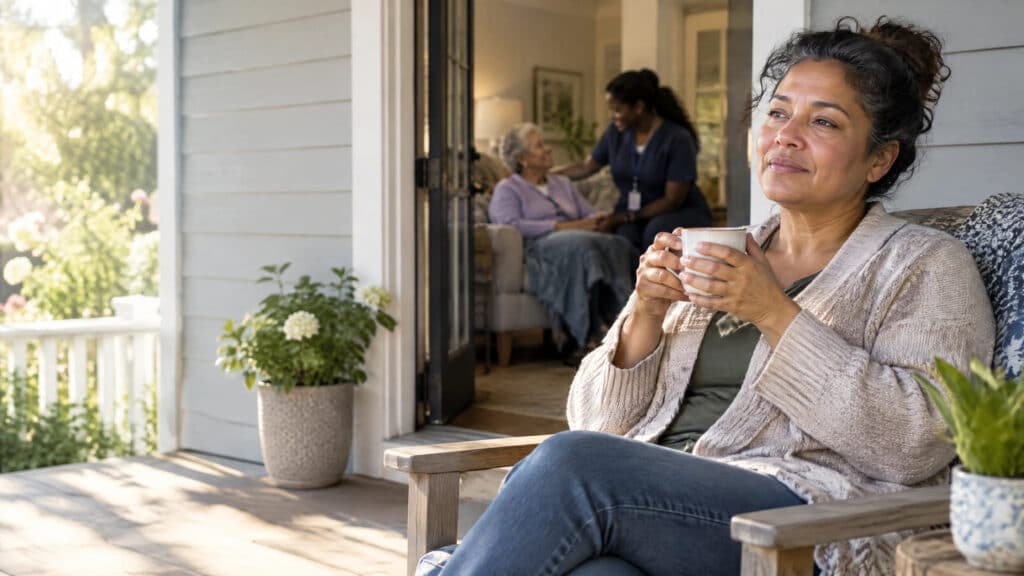
Family member relaxes with a cup of tea on a porch while a professional caregiver supports an older adult inside the home.

Family caregivers rarely get a real day off. Between a job, their own household, and the daily needs of a parent or spouse, the break keeps getting pushed to next week, until a wedding, a work trip, or plain exhaustion forces the question. Respite care is the planned answer to that problem. Here is what it is, when families actually reach for it, and how to set it up before you hit the wall.


What Is Respite Care?

Respite care is short-term, temporary in-home help that steps in so a family caregiver can step away. A professional Care Specialist covers the same daily support you normally provide, for a few hours, a few days, or a couple of weeks, and then you take back over. The whole point is to give the primary caregiver a genuine break, which is also the best protection against caregiver burnout. You can arrange in-home respite care as a one-time fill-in or a standing part of your week.


When Do Families Need It?

Families reach for respite care at a handful of predictable moments, and none of them mean you are failing. Set aside any feelings of guilt. The most common reasons are a caregiver’s own vacation or a family event, a work trip, personal medical appointments or surgery, and the slow build of exhaustion that leaves you short-tempered and running on empty.

You do not have to wait for a crisis. The families who do best treat these breaks as regular maintenance, a set afternoon or overnight each week, rather than an emergency call after they have already burned out. Booking a break before you need one is the difference between recharging and collapsing.

Respite care also helps right after a loved one comes home from a hospital stay, when caregiving responsibilities spike for a few weeks and the primary caregiver needs backup to manage safely.


What Does a Respite Care Specialist Actually Do?

A respite Care Specialist does what you do on an ordinary day. That means companionship, meals, medication reminders, light housekeeping, personal hygiene support, and supervision, all non-medical and matched to your parent’s normal routine. Overnight coverage is available too, so a Care Specialist can stay through the night while you sleep or travel.


How Respite Care Works

Respite care flexes to the gap you need filled. You can book it by the hour for an afternoon, overnight for a weekend, or around the clock for a week or two while you are away. It can be a single booking or a recurring one, like every Tuesday and Thursday. Most of it happens right in your parent’s home, so they keep their routine and their own bed while you get your break.

Plan ahead when you can, especially for travel dates, since finding the right match takes a little lead time. A good agency can also cover short-notice needs when something unexpected comes up.


Before You Hand Off

A short handoff turns a nervous break into a real one. Before you leave, write down your parent’s daily routine, meal preferences, and anything they dislike, and tape the medication schedule somewhere visible. Leave a list of who to call, your number first, then a backup family member and the doctor. Point out the small things a stranger would not know: which chair is theirs, how they take their coffee, the show they watch at four. Ten minutes of notes lets the Care Specialist step into the routine instead of guessing at it.


What Does It Cost, and Does Insurance Help?

The cost of respite care is usually billed by the hour at the same rate as regular in-home help, so a short booking stays flexible and predictable.

Coverage is the part families get wrong most often, so here is the honest version. Original Medicare pays for respite only under the hospice benefit, when your parent is already receiving hospice care, and only for up to five consecutive days at a time in an approved inpatient facility, not in the home. Most private health insurance does not cover it at all. Medicaid may help through state waiver programs, but rules vary significantly by state. Veterans enrolled with the VA and some long-term care insurance policies may also cover it. For everyday help at home most families pay privately, and your local Area Agency on Aging can point you toward programs and funding options.


Frequently Asked Questions


How long can respite care last?

Anywhere from a few hours to several weeks. It is built to flex, whether you need a single afternoon or two full weeks of coverage while you are out of town.

Does Medicare pay for respite care?

Only in one narrow case. Original Medicare covers respite care solely under the hospice benefit, for up to five days at a time in an approved facility. It does not pay for in-home respite in everyday situations, so most families pay privately or use Medicaid, VA, or long-term care insurance where they qualify.

Can it be a regular arrangement?

Yes, and it often should be. Many families set a standing weekly block so the primary caregiver gets dependable time off. Recurring respite care is one of the simplest ways to prevent caregiver burnout from building in the first place.

Getting the Break You Need

Taking a break does not make you a worse caregiver. It makes you one who can keep going. Private Home Care provides respite care for families throughout Chicago, Glenview, Northbrook, Wilmette, Evanston, Skokie, Park Ridge, St. Louis, and Kansas City. A few hours of planned coverage can reset the whole month.

Call (847) 779-3352 to speak with a Care Coordinator, or request a complimentary in-home assessment at privatehomecare.com.

,

How to Monitor Elderly Parents Living Alone (Without Cameras)

,

Questions to Ask a Home Care Agency: A Comprehensive Guide

Understanding Sundowning Dementia: Evening Challenges

Home Care vs. Memory Care Facility: How ChicagoNorth Shore Families Are Making the Decision

Compassionate caregiver and an elderly couple sitting together in a sunlit living room, offering support and companionship for families navigating dementia care decisions.

If someone you love has been diagnosed with Alzheimer’s or dementia, one of the first decisions families in Glenview, Wilmette, Northbrook, Evanston, and across the Chicago north suburbs face is whether to keep their loved one at home or move them to a memory care facility.

There is no single right answer. The right choice depends on your loved one’s current stage of dementia, their living situation, your family’s capacity to support them, and what matters most to the person at the center of this decision. This guide is meant to help you think through that honestly, not to push you toward any particular outcome.


What In-Home Dementia Care Looks Like


In-home dementia care means a trained Care Specialist comes to your loved one’s home on a scheduled basis, or lives with them full time in the case of live-in care, and provides support within the environment your loved one already knows.

For many people in the early to middle stages of dementia, familiar surroundings, their own furniture, their own neighborhood, their own routines, are genuinely stabilizing. Disorientation often increases when a person with dementia moves to a new environment. Staying home, with the right support, can preserve a sense of normalcy and reduce anxiety.

What Works Well With In-Home Care

  • Early to moderate stages of Alzheimer’s or dementia.
  • A safe home environment that can be adapted as needed.
  • A consistent Care Specialist who builds a real relationship with the client.
  • Family members who want to stay closely involved in daily care decisions.
  • A loved one who has expressed a clear preference to stay home.

Where In-Home Care Has Limits

  • Advanced dementia with significant safety risks that a home environment cannot address.
  • Medical needs that require 24-hour clinical oversight.
  • A family caregiver who has reached the point of exhaustion with no relief in sight.
  • A loved one who is isolated at home and would benefit from social engagement in a group setting.

What Memory Care Facilities Provide


Memory care facilities are specialized wings within assisted living communities, designed specifically for people with Alzheimer’s and dementia. They offer structured programming, a secure environment, and staff trained in dementia care available around the clock.

For families whose loved one has progressed to a stage where consistent in-home care is no longer sufficient to keep them safe, or where the family caregiving system has reached a breaking point, a memory care facility can provide a level of supervision and structured programming that home care cannot.


The Questions That Actually Help Families Decide


Rather than comparing lists of features, the families we work with across Glenview, Wilmette, Northbrook, and Evanston often find it more useful to sit with these questions:

  • What does our loved one want, and how clearly have we asked them?
  • What stage of dementia are we dealing with today, and what does the trajectory look like?
  • Is the home environment safe, or would it require significant modification?
  • Who in our family is currently providing care, and what is the realistic cost to them?
  • Have we actually tried structured in-home care, or are we making this decision without that information?

A Word on Timing


One of the most common things we hear from families who chose in-home care is that they wish they had started sooner. Not because the situation was an emergency, but because having a consistent Care Specialist in place before things became difficult gave their loved one time to adjust, build a relationship with the caregiver, and maintain more of their independence for longer.

The families who move directly to a facility without trying in-home care sometimes discover later that their loved one could have stayed home safely for longer with the right support. That is not always the case, but it is worth knowing before a decision is made.


How Private Home Care Supports Families Across the Chicago North Shore


Private Home Care provides in-home Alzheimer’s care for families throughout Glenview, Wilmette, Northbrook, Evanston, Skokie, Park Ridge, and the surrounding Chicago north suburbs, from our Chicago home care team in Niles.

If you are in the middle of this decision, we are happy to have an honest conversation about whether in-home care is the right fit for your family’s situation, without any pressure toward a particular outcome. We would rather help you make the right decision for your loved one than the one that happens to work for us.

Call (847) 779-3352 to speak with a Care Coordinator, or request a complimentary in-home assessment at privatehomecare.com.

,

How to Monitor Elderly Parents Living Alone (Without Cameras)

,

Questions to Ask a Home Care Agency: A Comprehensive Guide

Understanding Sundowning Dementia: Evening Challenges

Caregivers Help Aging Adults During COVID

With COVID putting aging adults at risk, many are turning to professional caregivers to provide safety and companionship.

Because the risk of death from COVID-19 increases with age, especially for those 65 years and older, aging adults and their families are facing new challenges.

Many aging adults are choosing to age longer in their homes to avoid higher exposure levels. In addition, we’ve seen an increase in people who have moved their loved ones out of care communities and into their own homes to promote social distancing. 

Private Home Care gets new calls every day from family members trying to keep their loved ones safe and healthy during this pandemic. We’re committed to providing the best care and making special efforts to protect the most vulnerable in our communities. Here are just some of the ways we can help your loved one during the COVID-19 outbreak: 

Caregiver COVID Safety Precautions and Procedures

Safety is always a top priority for both our clients and our caregivers. We closely follow the latest CDC guidelines and have implemented new procedures and precautions to limit the risk of exposure and spread of COVID-19. In addition to daily temperature screenings, we also make sure our staff have ample personal protection supplies. You can learn more about our COVID-19 policy here. 

Limiting Exposure to Others

Whether your loved one lives at home or in a care community, our professional caregivers can provide help. PHC provides care for a few hours each week up to 24-hour or live-in care. And because of our PHC Difference Model, your loved one will have limited exposure to others. They will be cared for by one caregiver or a consistent team of caregivers to limit their exposure. 

Preventing Isolation and Loneliness

Because of the risks of exposing their loved one to COVID-19, many family members and friends have been limiting their visits. This practice of social distancing can cause feelings of social isolation, loneliness, and depression among aging adults. Professional caregivers can help fill the gap and provide companionship as well as provide ways to reduce stress and boredom.

Staying in Touch with Family during COVID

If you are unable to visit your loved one, Private Home Care caregivers can help you stay in touch. Our caregivers can help your loved one use technology to stay connected when COVID keeps you apart. Our team also is committed to keeping care transparent and families well informed. We will communicate often about your loved one’s well being and care plan, so you always know your loved one is in good hands. 

Preparing Your Home for a Loved One

If you are moving your loved one into your home, we can help you assess and prepare your home to make them comfortable. We provide complimentary home assessments to identify potential hazards or recommend accommodations. Some simple changes can make to make it easier to provide care and provide a comfortable space for your loved one. 

Running Errands and Buying Supplies

Our caregivers can help minimize aging adults’ exposure to large groups of people by running errands for them. They can pick up medications, buy groceries, or anything else they may need. Even if a caregiver only visits occasionally, they can help your loved one stock up on necessities and make sure their needs are met.

Contact Us

If you’d like to learn more about how we can help, please contact us 24/7 for a complimentary in-home assessment at (844) 785-2273.

,

How to Monitor Elderly Parents Living Alone (Without Cameras)

,

Questions to Ask a Home Care Agency: A Comprehensive Guide

Understanding Sundowning Dementia: Evening Challenges