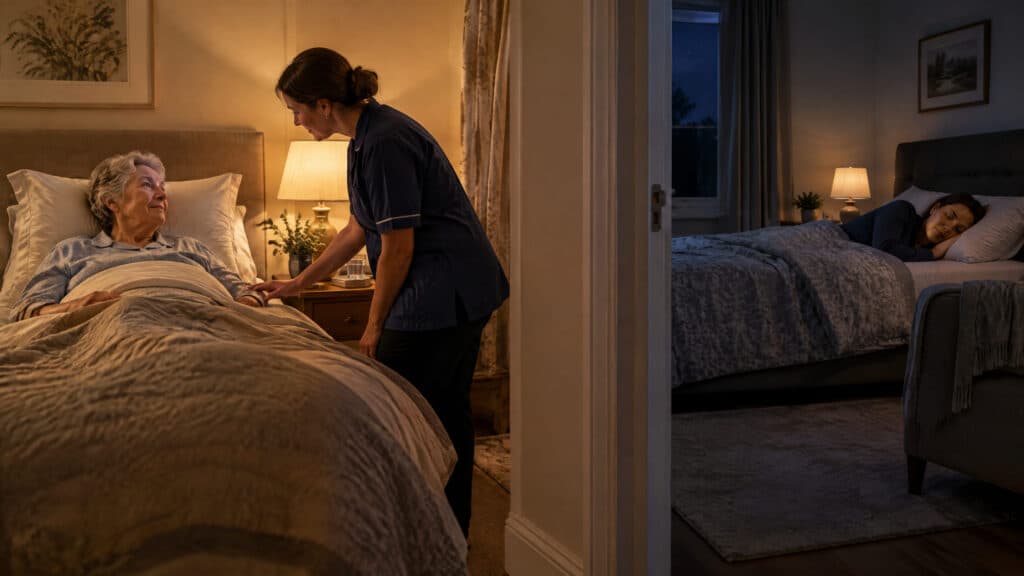


The moment you start looking into help for an aging parent, you run into two terms that sound almost identical: companion care and personal care. They are priced differently, they call for different training, and choosing the wrong one causes real problems. This guide breaks down companion care vs personal care so you can match the right level of help to what is happening at home right now.
What Is Companion Care?
Companion care is non-medical support focused on company, supervision, and help around the house. The Care Specialist handles meal preparation, light housekeeping, medication reminders, grocery shopping, and transportation to medical appointments. What it does not include is hands-on help with your parent’s body.
This level suits older adults who are still fairly independent but should not be alone all day. Maybe your father lives by himself and the social isolation is wearing on him. Maybe your mother forgets appointments or is no longer safe behind the wheel. A companion Care Specialist fills those gaps, offers steady social interaction and emotional support, and gives you a reliable presence in the home.
What Is Personal Care?
Personal care is hands-on physical assistance with the private, physical tasks a person does to look after their own body. A Care Specialist helps with bathing, dressing, grooming, personal hygiene, using the toilet, and the mobility assistance needed to move safely between the bed, a chair, and the bathroom.
It is still non-medical. A Care Specialist does not give injections, change wound dressings, or manage IV lines. That clinical work belongs to a home health nurse and counts as medical treatment, not daily support. Families usually reach this stage once they notice a parent wearing the same clothes for days, skipping showers because the tub feels dangerous, or steadying themselves on the furniture to cross a room.
The Main Difference
The core difference is physical contact. Companion care helps your parent with their surroundings and their routine. Personal care helps them with their body. Cost, Care Specialist training, and which type of help families choose all follow from that one distinction.
Companion Care
- Main focus: company, supervision, household help
- Typical tasks: meals, errands, driving, housekeeping, medication reminders
- Physical contact: little to none
- Common trigger: loneliness, mild memory changes, stopped driving
- Relative cost: lower
Personal Care
- Main focus: hands-on help with the body
- Typical tasks: bathing, dressing, grooming, toileting, transfers
- Physical contact: regular, close contact
- Common trigger: trouble bathing, dressing, or moving safely
- Relative cost: higher
Which One Does My Parent Need?
Choose companion care when your parent is safe handling their own body but needs company, supervision, or a hand with the house and errands. Move to personal care once bathing, dressing, or getting around safely has become genuinely hard.
Be honest about where things are heading. Companion care is not enough for a parent who has fallen in the bathroom, who cannot get off the toilet alone, or who has moderate dementia and needs guidance through every step of dressing. Stretching it too far puts your parent at risk and the Care Specialist in an impossible position. On the other hand, if your mother is sharp and steady and simply lonely, paying the higher rate buys nothing extra.
Many families start with a few hours of companion care and add personal care as needs change. A good Care Coordinator reassesses the plan regularly rather than locking you into one level.
Can One Care Specialist Do Both?
Yes. Most parents we work with across Chicago, Glenview, Northbrook, Wilmette, Evanston, St. Louis, and Kansas City have a single Care Specialist for both companion and personal care rather than picking only one. A Care Specialist might spend the morning helping your father shower and dress, then stay through lunch for company and a walk. You pay for the level of help actually used on each visit, right in their own home.
Does Companion Care Cost Less?
Generally yes. Companion care usually costs less per hour than personal care, because personal care calls for more formal training and carries more responsibility. As a rough national guide in 2026, non-medical in-home care runs between the mid-20s and mid-30s per hour, with companion care at the lower end and personal care higher. The real figure depends on the hours, the level of help, and where you live.
Frequently Asked Questions
How do I decide between companion care and personal care?
Start with what your parent struggles with. If it is loneliness, driving, or keeping the house running, companion care fits. If it is bathing, dressing, or moving safely, they need personal care. Many families need a mix, and the balance shifts over time.
Is companion care the same as a home health aide?
No. Companion care is non-medical. A home health aide, and especially a home health nurse, provides clinical work such as wound dressings, skilled nursing, or medication management, usually on a doctor’s order. Both levels are about daily living, not medical treatment.
Does Medicare pay for it?
In most cases, no. Medicare does not usually cover non-medical custodial care when that is the only help a person needs. Some Medicaid programs and private insurance policies do help with the cost.
How many hours do families start with?
There is no single number that fits everyone. Many families begin with a handful of hours a few days a week and scale up as they see what helps. Starting small also lets your parent get comfortable with a new face in the home.
Getting the Level Right
Getting companion care vs personal care right saves money, keeps your parent safer, and protects their quality of life. Private Home Care provides companion care and personal care to families throughout Chicago, Glenview, Northbrook, Wilmette, Evanston, Skokie, Park Ridge, St. Louis, and Kansas City. Call (847) 779-3352 to speak with a Care Coordinator, or request a complimentary in-home assessment at privatehomecare.com.