
Worrying about a parent who lives alone often starts with one missed phone call. Here is how to monitor elderly parents living alone without cameras: pair a daily check-in from a real person with a safety tool that fits how your parent lives. That tool might be a medical alert button or sensors that notice sounds and movement. Let your parent help choose.
This guide compares the most popular options and the practical ways families combine them. We offer some of these care services ourselves, so we also tell you where they are not the right fit. Honest trade-offs matter here.
Many adult children want two things at once: to know their parent is safe, and to respect their parent’s independent living. The good news is that remote monitoring no longer means a camera in every room. Modern technology gives families peace of mind with far less intrusion.
How to monitor elderly parents living alone: start with a conversation
The first step is an open conversation with your parent about what worries you and what they are willing to accept. The National Institute on Aging says the best way to learn what an older adult needs is to ask them directly. A short visit often tells you more than a phone call.
Pick the right time for an honest talk, such as a calm weekend visit rather than the day after a scare. Make your parent part of the decision, so they can live on their own terms and keep their personal space. The most respectful monitoring tools are the ones your parent chose.
Agree on what “checking in” means before you buy anything. Some parents are happy with a call during their morning routine, while others feel watched by anything more. Start small and build a shared plan with other family members, so everyone knows who calls and when.
How to monitor elderly parents living alone: your options at a glance
Most families use two or more of these options together. Each one covers a different gap, and none of them catches everything on its own.
| Option | What it catches | What it misses | Privacy |
|---|---|---|---|
| Family calls and visits | Mood, memory and home changes you can see | Anything between calls | High |
| Daily check-in service | A missed routine, low mood, skipped water or medicine | Falls between calls | High |
| Medical alert device | Emergencies your parent can report | Falls when the button is not worn or pressed | High |
| Sound and motion sensors | Sudden impacts and unusual sounds or movement | Problems the sensors cannot pick up, such as poor eating | Medium to high |
| Smart home devices you set up | Doors opening and changes in daily activity | How your parent is feeling, unless you call | Medium to high |
| Indoor cameras | What happens in the rooms they cover | Rooms without cameras, and your parent’s trust | Low |
| In-home caregiver | Daily care needs, and changes a trained person notices | Hours when no one is there | High |
How to monitor elderly parents living alone with daily check-in calls
A daily check-in is a scheduled phone or video call from a real person at the same time each day. The call gives your parent structure and a friendly voice. It also flags early signs that something is off, such as a loss of appetite or a change in mood.
Our daily check-in service for seniors living alone can include medication reminders, hydration prompts and conversation. It is available nationwide, once or twice a day. A check-in call cannot see a fall that happens an hour later, so families who worry about the risk of falls usually add a second layer.
Family calls work best when they fit the most natural parts of the day. A chat over morning coffee or a shared crossword on the phone feels like company to most parents, and it still tells you how they are doing. Your parent keeps a normal routine.
How to monitor elderly parents living alone with a medical alert button
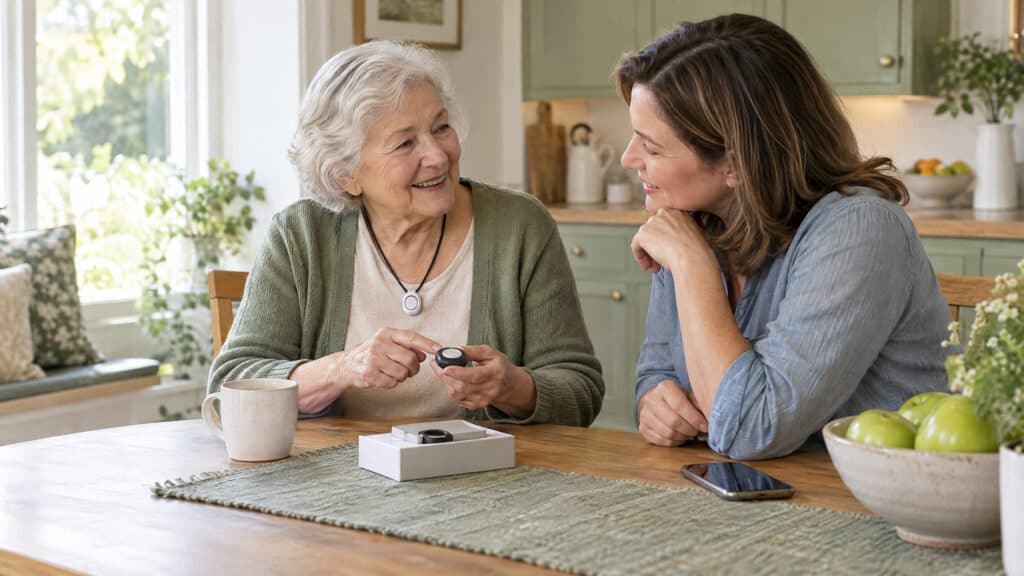
A medical alert button is a pendant or wristband your parent presses to call for help. Many medical alert systems connect to a call center with professional monitoring, where trained staff can talk to your parent and send emergency services if needed. Some models add optional fall detection for times your parent cannot press the button. A mobile system with GPS also works outside the home.
A medical alert device only helps when your parent wears it, including in the shower and at night. Without it, a fall can leave someone on the floor for an extended period. If your parent often takes it off, a tool that needs nothing from them may suit them better.
How to monitor elderly parents living alone with sensors, not cameras
Sound and motion sensors watch for unusual activity in the home, such as a sudden impact, a sound that suggests distress, or a change in movement. They need no button and nothing to wear, and good systems do not record video or conversations. This passive approach suits a parent who forgets or refuses a pendant.
Our senior monitoring system does not use cameras or wearable devices, and it does not record conversations or store audio. Alerts go to our Care Managers and operations team 24/7, who follow up after each alert. Virtual Care Plus adds one sensor to a daily virtual wellness visit, and Virtual Care Pro includes both sensors.
Some families build their own setup from smart home devices instead. Activity sensors in key areas, such as the front door or the medicine cabinet, can learn your parent’s activity patterns over a few weeks. Most smart devices then send a push notification to a mobile app when something looks unusual.
Sensors can help monitor activity and safety, but they only tell part of the story. They cannot tell you whether your parent is eating well or taking medicine correctly, so pair them with a person who checks in regularly.
Indoor cameras
Indoor cameras show you exactly what is happening in a room, live or recorded, and many have night vision. They can bring real peace of mind, especially for a parent with memory challenges who forgets to call back.
The cost is privacy. Many older adults feel watched in their own home, and a camera in a bedroom or bathroom is rarely acceptable. If you use one, place it in a shared space such as the living room, tell your parent where it is, and agree on when you will check-in.
When a check-in is not enough
Technology can tell you that something has changed. It cannot help your parent shower or get to the doctor. Signs that your parent needs hands-on help include missed meals, falls or near falls, unpaid bills and a home that is less tidy than usual. Our list of signs an aging parent needs help at home covers the full picture.
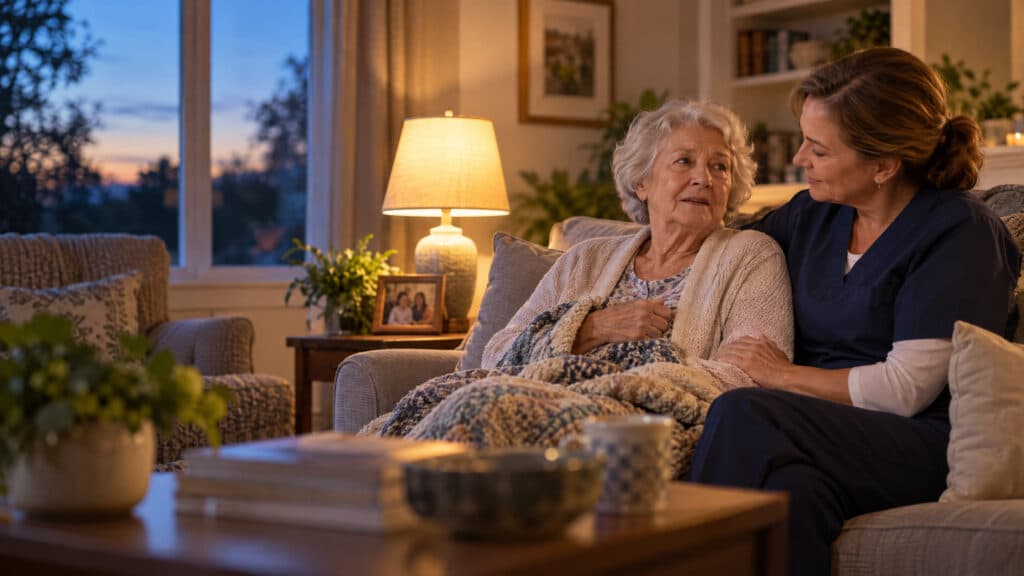
To bridge this gap, a caregiver can provide the consistent, hands-on support that technology alone cannot. A caregiver can start with a few hours a week and grow from there as your parent’s needs change. Many families combine those visits with check-in calls on the other days, which means someone hears from their parent every single day. This mix of home care and calls lets your parent stay at home with less risk.
Frequently asked questions
How can I monitor my elderly parents remotely?
You can monitor elderly parents remotely with a daily check-in call, a medical alert button, or sound and motion sensors that send alerts to a care team. Most families combine a person who calls with a device that works between calls. Talk with your parent first, and choose together.
How can I monitor my elderly parents at home without a camera?
The easiest way to monitor elderly parents living alone without a camera is to use sensors that detect sudden impacts and unusual sounds or movement. Add a daily check-in call or visit, and a medical alert button if your parent will wear one. This covers emergencies and daily routine while keeping their privacy.
What is the best camera to monitor an elderly parent?
The best camera is the one your parent has agreed to, placed in a shared room. We do not sell cameras, so we cannot recommend a model. If privacy is a concern, sensors that do not record video are a gentler choice.
Find the right mix for your parent
Knowing how to monitor elderly parents living alone comes down to a mix: a person who checks in, plus a tool that works between calls. Every family’s mix looks a little different, and the right approach to elderly care changes as your parent ages. Call (844) 785-2273 to talk through your parent’s routine, and we will help you choose what fits.