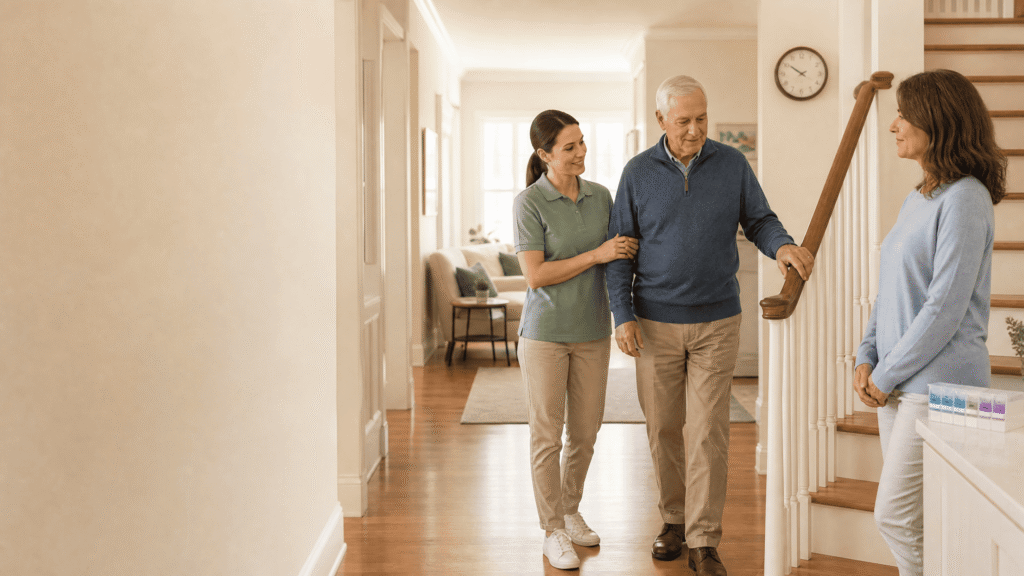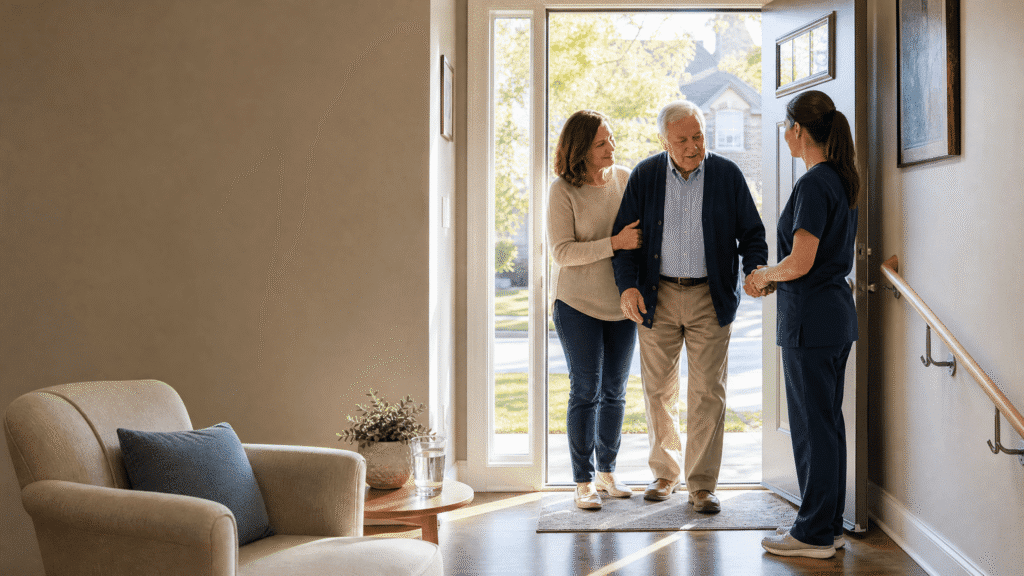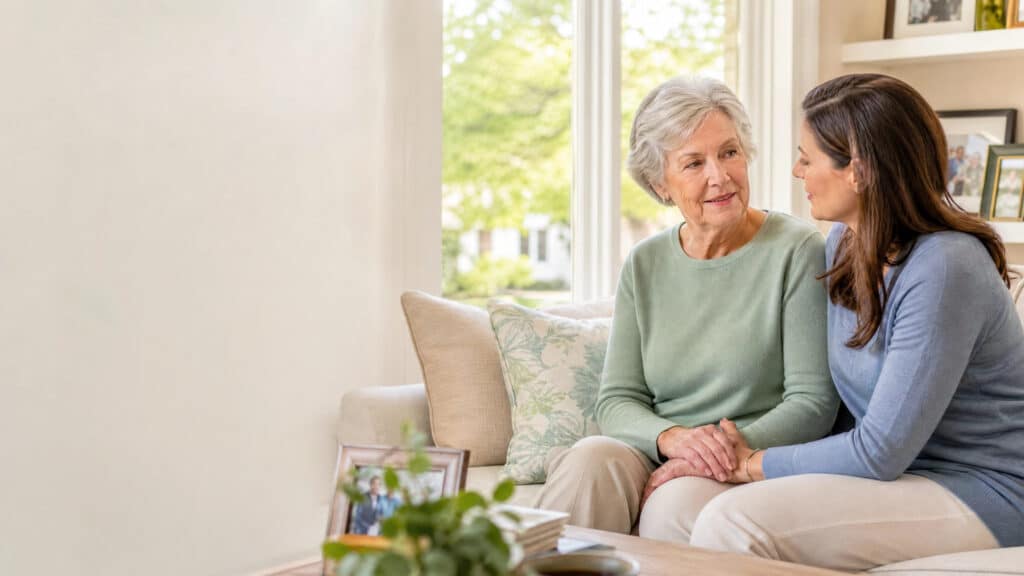

When people think about home care, they often imagine assistance with daily tasks, meals, bathing, medication reminders, or mobility support. While those services are essential, they only begin to describe what truly personalized care at home can offer.
At Private Home Care, we have the privilege of supporting individuals who continue to live deeply meaningful lives well into advanced age, in Kansas City, St. Louis, and Chicago.
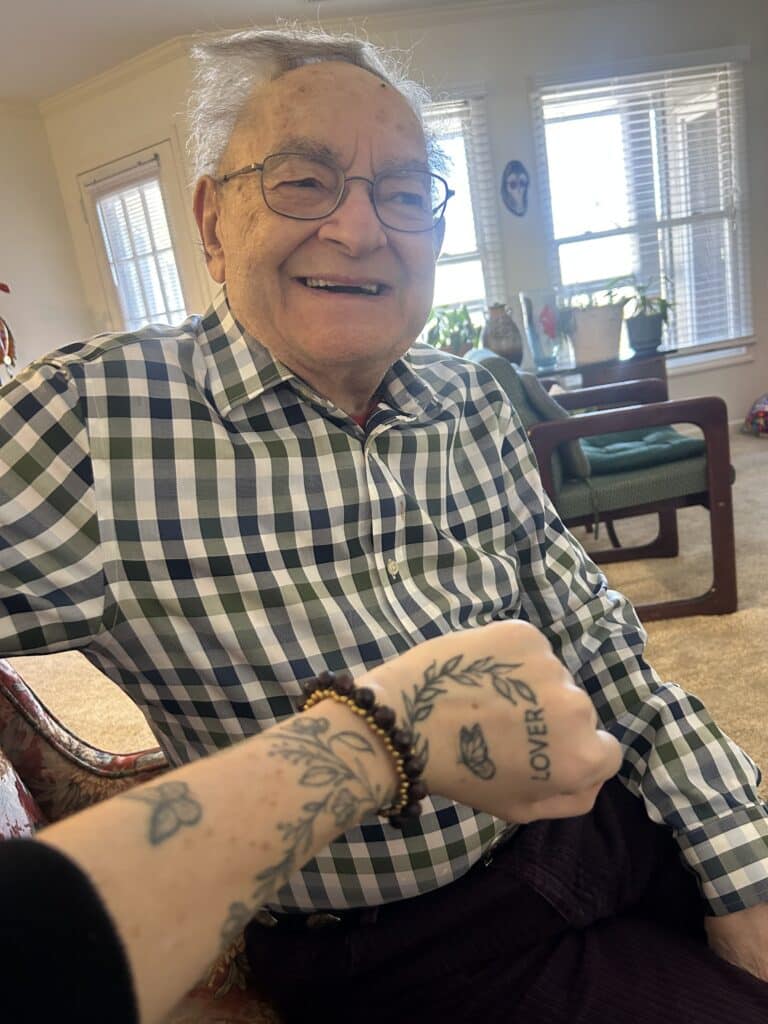
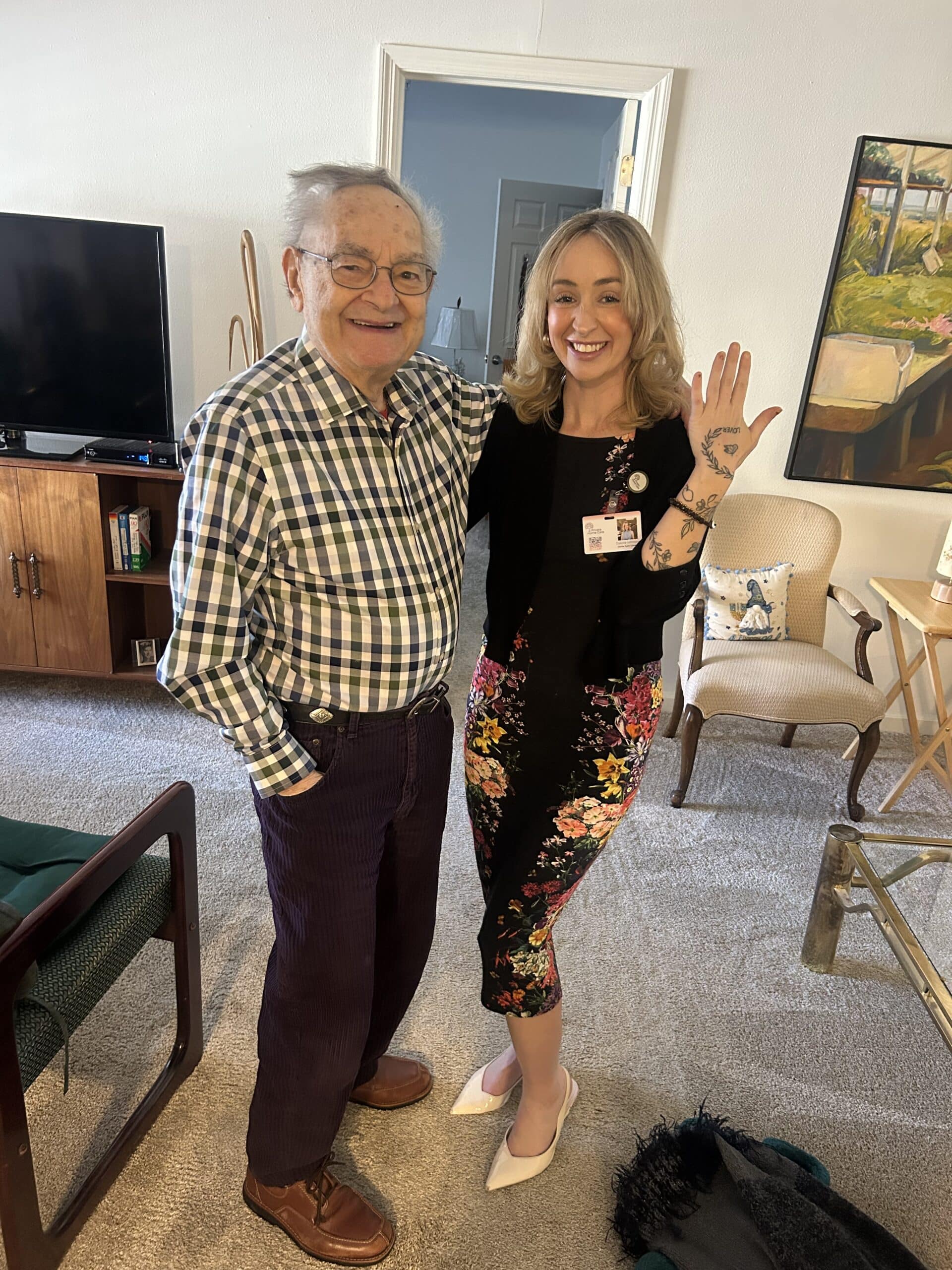
Recently, during a routine visit in Kansas City, one of our care managers was gifted a handmade bracelet by a client in his 90s. He is an artist. Still creating. Still expressing himself. Still giving something of himself to the world.
This was not a clinical interaction. It was a human moment.
And it illustrates something larger: the difference between lifespan and healthspan.
Lifespan vs. Healthspan: Why It Matters
As longevity increases, the conversation is shifting. It is no longer only about how long someone lives, but how well they live during those years.
Healthspan refers to the years a person lives with purpose, identity, engagement, and dignity.
Private home care, when structured properly, is not simply reactive support after decline. It can be one of the most powerful tools for preserving healthspan, allowing individuals to remain in familiar environments, maintain routines, and continue participating in life.
Even individuals receiving 24-hour home care can experience years of stability and continuity when supported in their own homes.
Unlike institutional settings built around standardized routines and shared staffing models, one-on-one care is structured around the individual.
For the right person, that difference changes everything.

Aging in Place in Kansas City, St. Louis, and Chicago
In Kansas City, St. Louis, and Chicago, we see firsthand how aging in place preserves identity.
For many families exploring private home care in Kansas City, remaining at home means
continuity, continuing daily habits, relationships, and creative expression.
In St. Louis, one of our caregivers, Deanea (St. Louis), has supported the same client for eight years. That client has received around-the-clock care for nearly a decade, not in an institution, but at home. That continuity is not simply about safety. It allows familiarity to anchor cognitive and emotional stability.
In Chicago, Ankit (Chicago) has cared for clients facing complex medical challenges, including Locked-in Syndrome. Even in highly clinical circumstances, home-based care enables dignity and individualized attention that institutional models often struggle to provide.
Aging in place does not eliminate the realities of aging. But it profoundly influences how those realities are experienced.
What Research Says About Home-Based Care
Research increasingly supports what families observe daily.
Studies published in the Journal of the American Geriatrics Society indicate that older adults receiving care at home often experience fewer hospitalizations and improved mental health outcomes compared to those in institutional settings.
Analyses in Health Affairs show reductions in emergency department visits and healthcare utilization among individuals receiving home-based care.
Research highlighted in The Gerontologist associates aging in place with greater life satisfaction and stronger autonomy, both core drivers of healthspan.
These outcomes reflect stability:
Fewer disruptive health crises
- Fewer disruptive health crises
- Less functional decline from repeated hospital stays
- Greater emotional continuity
Home care supports safety, but it also supports identity.
One-on-One Care Preserves Engagement
There is a common assumption that receiving care at home may lead to isolation.
In practice, the opposite is often true.
The consistency of caregivers builds trust. Familiar surroundings reduce stress. Daily routines reinforce cognitive and emotional stability.
One-on-one care enhances connection rather than replacing it.
The home itself becomes a stabilizing force, preserving memories, reinforcing identity, and maintaining autonomy.
This is how someone in their 90s can continue making art.
Not because they are independent of care, but because care allows independence to exist in a supported way.

Continuity vs. Transition
Assisted living and skilled nursing communities provide important services, and many individuals thrive in those environments.
However, the average stay in assisted living is approximately two years, with frequent transitions between levels of care.
Home-based care offers another pathway.
Instead of adapting to a new environment, the environment adapts to the individual.
That continuity matters, emotionally, cognitively, and physically.
And in cities like Kansas City, St. Louis, and Chicago, families increasingly recognize the value of this model.
The Healthspan Advantage
Home care does not eliminate aging.
But it can transform how aging is experienced.
The artist in Kansas City did not simply live into his 90s; he lived as himself into his 90s.
Still creating.
Still connecting.
Still participating in life.
That bracelet was more than a thoughtful gesture.
It was evidence of healthspan.
As longevity increases nationwide, the question is no longer only how long people live.
It is how well they live.
By preserving safety without sacrificing identity, enabling engagement rather than limiting it, and maintaining familiarity in the face of change, one-on-one private home care helps extend not just lifespan, but the richness of life itself.
And sometimes, that impact can be seen in something as small, and as meaningful , as a handmade bracelet.