
When a parent’s illness can no longer be cured, many families in St. Louis want to keep them at home. What families are rarely told is who covers the hours between hospice visits. For palliative care at home, St. Louis families usually mix three kinds of support: a hospice team, family members, and a private Care Specialist for the hours family cannot cover alone.
Private Home Care is not a hospice provider, but we can provide hospice and palliative support at home alongside your parent’s hospice team, and our Care Specialists follow their direction every step of the way.
The Difference Between Palliative Care and Hospice
Palliative care eases pain, stress, and other symptoms of a serious illness to improve quality of life. Your parent can receive palliative care while still being treated for the illness. Hospice is palliative care for the last months of life, after curative treatments have ended.
Both put comfort first. Both can happen at home. The key difference is whether treatment to cure the illness is still part of the picture.
Your parent can also stop hospice at any time and return to treatment that aims to cure the illness. The decision is never permanent.
What the Hospice Team Provides at Home
The hospice care team brings nursing visits, doctor visits, hospice aide visits, medications for symptom management, and equipment like a wheelchair or walker. A hospice nurse and doctor are on call 24 hours a day, 7 days a week. Most of this care happens at home.
Medicare pays the hospice directly. Families pay nothing for covered care except up to $5 per prescription for pain and symptom medications. The hospice team looks after physical, emotional, social, and spiritual needs. Its social workers and counselors also provide grief support for the family.
For hospice care in St. Louis, families can compare Medicare-approved providers on Medicare’s Care Compare tool or ask the attending doctor for a referral. Only an approved hospice is covered. Your parent can keep their regular doctor or nurse practitioner as the attending professional on the team.
Hospice also offers respite care for family caregivers. A respite stay gives the person doing most of the caregiving a short break. Medicare covers inpatient respite stays of up to 5 days at a time on an occasional basis, with the family paying 5 percent of the approved amount.
What Hospice Does Not Cover at Home
Hospice does not pay for around-the-clock care at home. The Medicare benefit covers team visits on a schedule. The hours in between come from family, friends, or private Care Specialists.
If your parent chooses hospice at home, St. Louis families should plan for the gaps between visits, especially overnight. Medicare also does not pay for room and board, for treatment meant to cure the terminal illness, or for care that was not arranged by the hospice team.
Medicare does not include free housekeeping services. Any offer of free housekeeping in exchange for signing up with a particular hospice is a warning sign of fraud and should be reported.
How Private Care Works Alongside Hospice
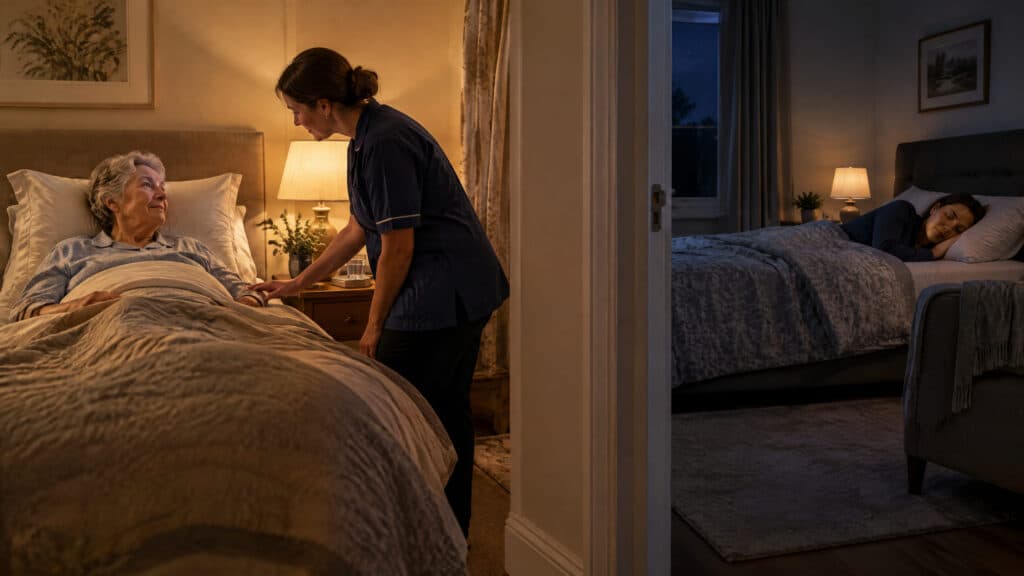
A private Care Specialist covers the daily care between hospice visits, while the hospice team stays in charge of all medical decisions. When hospice is in place, our Care Specialists follow the hospice plan of care and stay with your parent for anywhere from 4 to 24 hours a day. Many families need those additional hours.
Our Care Specialists handle personal care including bathing, dressing, grooming, toileting, and feeding support. They also help with meal preparation, laundry, light housekeeping, and errands, so family members have time to rest and simply be together with their loved one.
Each family has a dedicated Care Coordinator who keeps the hospice team, any outside care manager, and the family up to date. Our care team is available 24/7, and your Care Coordinator follows up during office hours. Our Care Specialists also offer emotional support to the whole family during an incredibly difficult time.
Areas We Serve in St. Louis
We serve families across St. Louis County and St. Charles County, operating from our office in Olivette. Our Care Specialists travel regularly to:
- Ladue
- Clayton
- Chesterfield
- Kirkwood
- Webster Groves
- Creve Coeur
- Town & Country
- Des Peres
If your parent lives in assisted living or a nursing home, we can provide additional care there too. For a complete picture of the communities we serve, visit our St. Louis location page or call us if your town is not listed.
Questions to Ask Before Care Starts
Bring these questions to the first hospice visit, and to any agency you call about palliative care at home. St. Louis hospices and private care agencies should be able to answer each one clearly.
- How often will the nurse and the aide visit, and for how long?
- Who do we call at night, and how fast does the on-call nurse respond?
- Which costs are not covered, and can we get that list in writing?
- What is the minimum shift length, and how will the Care Specialists follow the hospice plan?
- Who coordinates between the hospice team and the private Care Specialists?
Frequently Asked Questions
How soon can palliative care at home start?
For palliative care at home, St. Louis families usually begin by asking the parent’s doctor for a referral, since palliative services may require one. Hospice can start once the hospice doctor and the regular doctor certify that your parent qualifies, and your parent signs a form choosing hospice. Our own Care Specialists can usually start within 24 to 48 hours of your first call, and same-day support is often possible for urgent situations.
What happens during a home visit from a palliative care team?
A palliative care team visit focuses on easing your parent’s symptoms and understanding what matters most to your parent and your family. The team may include doctors, nurses, social workers, and nutritionists. Writing down your questions before the visit helps make the most of the time.
Who is eligible for palliative care or hospice at home?
Anyone with a serious illness can ask about palliative care, and your parent does not have to be near the end of life to receive it. Palliative care is rarely its own insurance benefit, so costs typically fall under the medical coverage in your parent’s insurance plans. Hospice has stricter rules. Your parent needs Medicare Part A, a certified life expectancy of 6 months or less, and must choose comfort care over treatment to cure the illness. Medicare also covers a one-time conversation with a hospice doctor before your parent decides.
How do you find palliative care services in St. Louis?
To find palliative care at home, St. Louis families can start with the parent’s doctor or hospital, since either can refer you to palliative and hospice teams. The right fit depends on your parent’s illness, insurance coverage, and personal goals, so take the time to ask each provider the questions above. Our St. Louis location page also lists local senior resources, including the St. Louis Area Agency on Aging.
Here When You Need Us
Palliative care at home is one of the most important decisions a family will ever make for a loved one. When you are ready to plan, a Care Coordinator can help you map out every hour, coordinate with the hospice team, and make sure your family has the support it needs to be fully present during this time.
Call (314) 492-4005 to speak with a Care Coordinator, or request a complimentary in-home assessment at privatehomecare.com. We serve families throughout St. Louis County and St. Charles County from our office at 9338 Olive Blvd, Suite 200, Olivette, MO 63132.