
Introduction
What Is Home Health Care?
- Skilled nursing care
- Medication reminders
- Physical therapy
- Mobility assistance
- Personal hygiene support
- Meal preparation
- Companionship
- Transportation assistance
- Light housekeeping
Home-based care can be temporary after surgery or illness or ongoing for seniors who need daily support.
Private home care agencies provide personalized care plans designed around each client’s lifestyle, health concerns, and independence goals.
What Is Nursing Home Care?
A nursing home is a residential facility that provides 24/7 supervision and medical support for seniors with advanced healthcare needs.
Nursing homes are designed for individuals who:
- Require continuous nursing care
- Need extensive rehabilitation
- Have serious mobility limitations
- Cannot safely live alone
- Need help with most daily activities
Services commonly include:
- Around-the-clock nursing supervision
- Medication administration
- Rehabilitation therapy
- Meals and housekeeping
- Assistance with bathing and dressing
- Emergency medical monitoring
Unlike home care, seniors move into the facility full-time and receive care in a shared or private living environment.
Key Differences between Home Health Care and Nursing Home Care
Living Environment
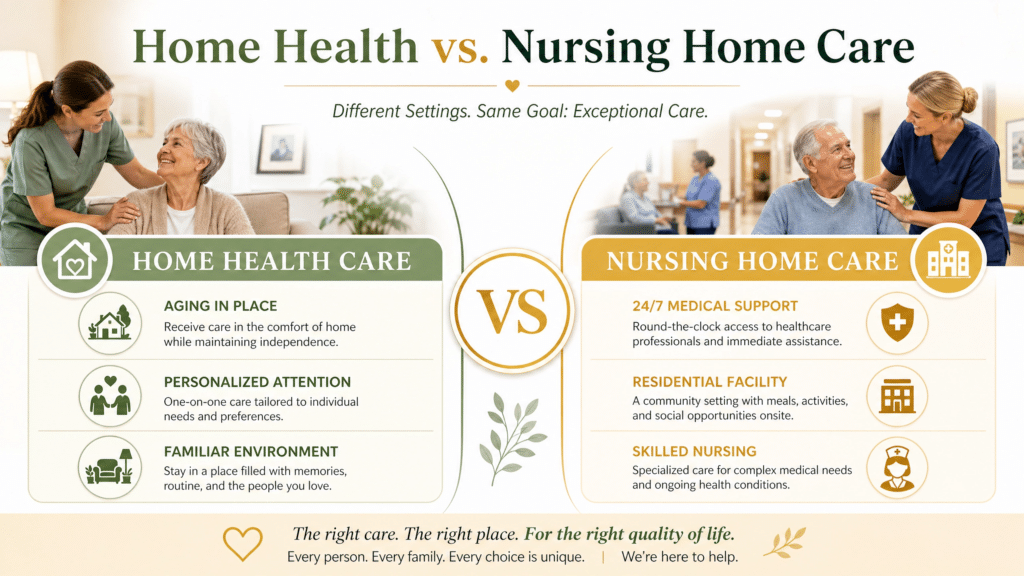
One of the biggest differences between home health care and nursing home care is where care takes place.
With home care, seniors remain in familiar surroundings where they feel comfortable and emotionally secure.
Nursing homes require seniors to relocate into a facility setting with structured routines and shared caregiving staff.
Many seniors prefer aging in place because it allows them to maintain independence and stay close to family, pets, neighbors, and personal belongings.
Level of Personalized Attention
Home care services are highly personalized because caregivers typically focus on one client at a time.
Caregivers can tailor support around:
- Daily routines
- Personal preferences
- Meal choices
- Exercise habits
- Social interaction
- Family schedules
In nursing homes, staff members often care for multiple residents simultaneously, which may limit one-on-one attention.
Medical Care Needs
Nursing homes generally provide more advanced medical oversight than non-medical home care services.
This may include:
- Complex wound care
- IV therapy
- Post-surgical rehabilitation
- Chronic disease monitoring
- Continuous nursing supervision
Home health care can still provide skilled nursing and therapy services, but seniors with severe medical conditions may require facility-based care.
Families should speak with healthcare providers to determine the safest level of care.
Independence and Emotional Well-Being
Many seniors experience greater emotional comfort when they remain at home.
Home care allows older adults to:
- Maintain familiar routines
- Enjoy greater privacy
- Stay connected with family
- Continue hobbies and activities
- Preserve independence
For seniors with dementia or cognitive decline, familiar environments may also help reduce stress and confusion.
Comparing Home Care and Nursing Home Costs
Home Health Care Costs
Home care costs vary based on:
- Number of care hours needed
- Type of services provided
- Geographic location
- Overnight care requirements
Part-time home care is often more affordable than full-time residential nursing care.
Families also avoid facility housing costs associated with nursing homes.
Nursing Home Costs
Nursing homes are generally more expensive because they include:
- Housing accommodations
- 24/7 staffing
- Medical supervision
- Meals and housekeeping
- Facility operations
Monthly nursing home costs can be substantial, especially for private rooms or long-term stays.
Families should review insurance coverage, Medicare limitations, Medicaid eligibility, and long-term care insurance options when evaluating expenses.
Who Benefits Most From Home Care?
Home care may be ideal for seniors who:
- Want to remain at home
- Need assistance with daily activities
- Require companionship
- Need post-hospital recovery support
- Have early-stage dementia
- Need flexible care schedules
Professional caregivers can assist with bathing, dressing, meal preparation, transportation, medication reminders, and household support while helping seniors maintain dignity and independence.
When Nursing Home Care May Be Necessary
A nursing home may be appropriate for seniors who:
- Require 24/7 skilled nursing care
- Have severe mobility impairments
- Need extensive rehabilitation
- Experience frequent medical emergencies
- Cannot safely remain at home
In these situations, continuous medical supervision may provide greater safety and stability.
Questions Families Should Ask Before Choosing Care
Before selecting between home health care and nursing home care, families should consider the
following questions:
What level of medical care is needed?
Can care safely be provided at home, or is ongoing medical supervision required?
What are the senior’s personal wishes?
Many older adults strongly prefer remaining in their own home whenever possible.
What is the long-term budget?
Compare home care costs, nursing home expenses, insurance coverage, and available financial assistance.
Is family support available?
Some families combine professional caregiving with assistance from relatives.
How important is independence?
Aging in place may improve emotional well-being and overall quality of life.
Why Many Families Choose Private Home Care
Private home care offers flexible, compassionate support tailored to each senior’s needs.
Families often choose home care because it provides:
- One-on-one attention
- Flexible scheduling
- Personalized care plans
- Emotional companionship
- Greater independence
- Comfort and familiarity
Private Home Care helps seniors age safely at home through dependable and affordable care services focused on dignity, trust, and personalized support.
Frequently Asked Questions
Is home health care the same as non-medical home care?
No. Home health care usually includes medical services provided by licensed healthcare professionals, while non-medical home care focuses on personal care, companionship, and assistance with daily activities.
Is home care less expensive than a nursing home?
In many cases, yes. Seniors who only need part-time assistance often find home care more affordable than full-time nursing home residency.
Can seniors with dementia remain at home?
Many seniors with early or moderate dementia can safely age in place with professional caregiving support and supervision.
Does Medicare cover home health care?
Medicare may cover medically necessary home health services prescribed by a physician, but it typically does not cover long-term custodial care.
How do families know when nursing home care is necessary?
Nursing home care may become necessary when a senior requires continuous skilled nursing supervision or can no longer remain safe at home